Showing posts with label Truman Capote. Show all posts

Thursday, March 14, 2024

In Tepid Blood

Although it was masterfully done, Feud Season Two left me feeling that I didn’t really care what happened to Truman Capote or his Swans.

Truman destroyed a great talent with booze and pills, and practiced treachery to boot. And the Swans were Sondheim’s Ladies Who Lunch, permanently pickled in their own frustrations.

People who have every imaginable resource handed to them and nevertheless manage to remain unhappy tend to drain the well of sympathy.

Saturday, March 9, 2024

The Tiffany Trick

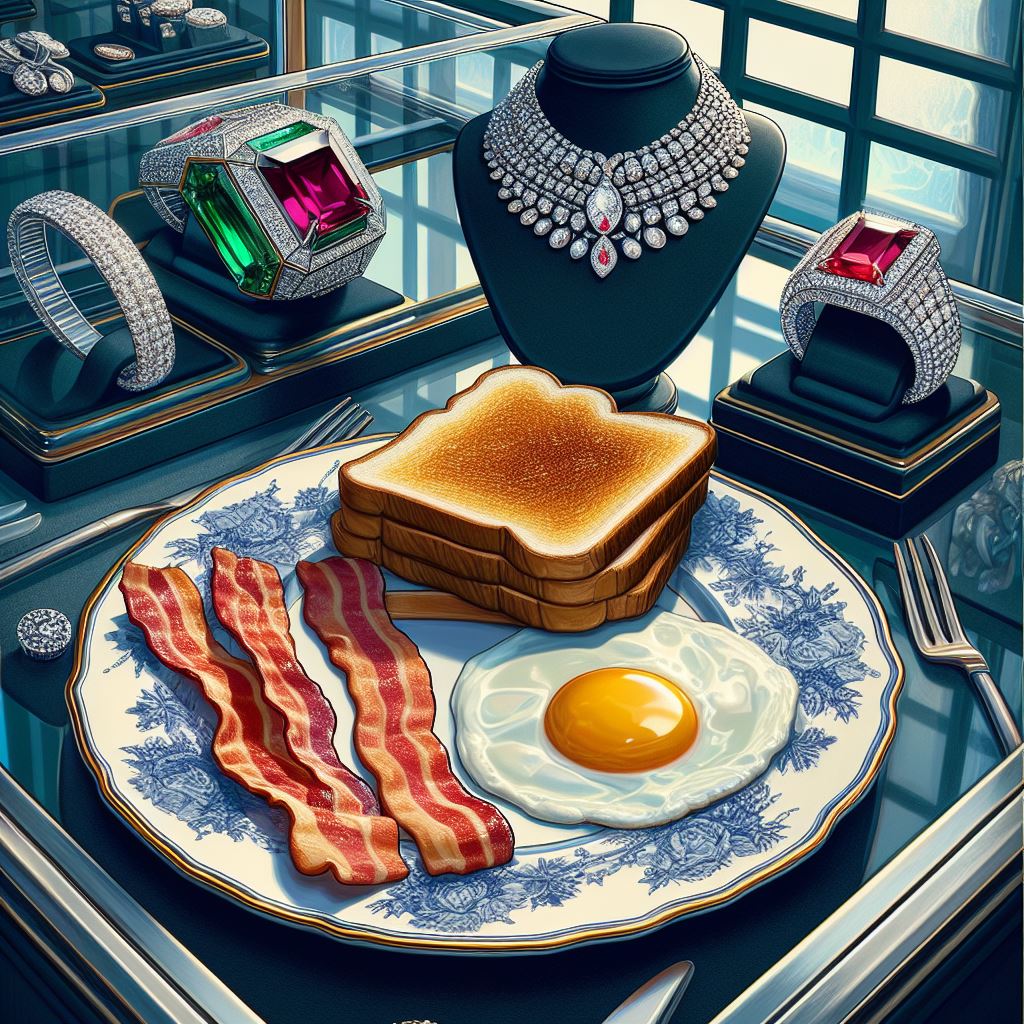
“During World War II, a man of middle age entertained a Marine one Saturday night. The man enjoyed himself so much in the Marine’s muscular embrace that he felt he should buy him something to show his gratitude, but since it was Sunday when they woke up, and the stores were closed, the best he could offer was breakfast.

“’Where would you like to go?’ he asked. ‘Pick the fanciest, most expensive place in town?’

“The Marine, who was not a native, had heard of only one fancy and expensive place in New York, and he said, ‘Let’s have breakfast at Tiffany’s.’”

Capote, Gerald Clarke

And that anecdote gave Truman Capote a title.

Sunday, July 31, 2016

I'm Crossing You in Style Some Day

Audrey Hepburn as the Truman Capote character whose cards read "Holiday Golightly, Traveling."
When I first watched Blake Edwards’ 1961 film Breakfast at Tiffany’s at age 12, I was immediately fascinated by Holly Golightly’s veneer of toughness over vulnerability, particularly because Audrey Hepburn’s plucky portrayal of Truman Capote’s character was counterpointed by the poignancy of Henry Mancini’s song Moon River.
 “I suppose you think I’m very brazen or très fou or something.” Mad parties, mean reds, the cat in the rain. Youth and beauty and longing.
Thus have gay voices always reached across the generations to each other, even when others could not hear them.

Wednesday, November 27, 2013

James Bond Breakfasts at Tiffany's


The young Truman Capote
Ian Fleming

During the 1956 Jamaican sojourn when he was writing “From Russia With Love,” Ian Fleming’s unlikely houseguest at Goldeneye was Truman Capote.
The tall, womanizing English spy novelist and the tiny, effeminate American writer got along well. The creator of James Bond described the creator of Holly Golightly as a “fascinating companion” who told “wonderful stories all day long when we weren’t working.”
When Fleming’s young, wealthy racehorse fancier friend Billy Woodward was shot to death by his wife, Fleming dedicated a novel, “Diamonds Are Forever,” to his memory, no doubt wishing Woodward had heeded him when Woodward asked Fleming what to do about his socially inept ex-showgirl wife, Fleming replied, “Divorce her, old boy. Divorce her.” Capote fictionalized the tragedy in his novella “Answered Prayer.”
Fleming’s wife, Ann, was in England while Capote was Fleming’s
houseguest, and was amused by the notion of them staying together with Noel Coward and Cole Lesley as friendly neighbors.
“Goldeneye was the last heterosexual household,” she quipped. “What will its reputation be now?”
Source: “Ian Fleming” by Andrew Lycett


Saturday, May 25, 2013

Vidal and Capote: Those Catty Literary Lions


They were both famous authors and professional celebrities, vain and gay, catty literary lions who concealed a claw behind every purr and competed for attention on several levels at once. Having so much in common wasn’t entirely a good thing for Gore Vidal and Truman Capote.
In the late 1940s, Vidal was visiting composer/author Paul Bowles in Morocco, and his frenemy Capote was coming but didn't know Vidal was already there. Vidal, delighted at the idea, insisted on going to the ship with Bowles to surprise Capote. There was Capote on deck, waving in his Dr. Who scarf, right up to the moment when he saw Vidal. Then his face fell like Daffy Duck's and he literally sank beneath the railing.
“When he assumed a standing position again, he was no longer grinning and waving,” Bowles recalled.
They crossed paths at a party in New York, where Vidal recounted that, not wearing his glasses, he sat down "on what I thought was a stool and it was Capote."
"Of course, I'm always sad about Gore," Capote told David Susskind. "Very sad that he has to breathe every day." Vidal later called Capote's death a "good career move."
Vidal dryly observed that Capote had "raised lying into an art — a minor art" and that he "belongs less to the history of literature than the history of public relations."
"I find on TV I am often supposed to talk about fashions and famous society ladies," Vidal said. "I then remind the host that I am the one who talks about politics and Capote is the one who tells naughty stories about the rich and Mailer is the messiah."
As for Norman Mailer, he famously threw the contents of a drink and an ineffectual punch into Vidal's face at a glitterati gala thrown in honor of Princess Margaret (who had sent her regrets, perhaps wisely). The incident prompted Russell Baker to write a column about the beatings that the "bloodthirsty" Henry James had delivered to his literary rivals. "James finally retired from pugilism after Edith Wharton knocked him out for 35 minutes with her famous powder-puff uppercut during a chance meeting at Alice Roosevelt's coming-out party," Baker wrote.
In 1965, Capote showed up in Rome, where Vidal was living. “We had a pleasant drunken evening recalling who said what about whom, and I must say my blood pressure began to rise, but then all ended well,” Vidal recalled. “He has apparently finished that book (‘In Cold Blood’), though the last two times I saw him he had just finished the book on each of those occasions.”
“I can’t get over how his appearance has changed (I can hear him on the subject of me), but he is an interesting brackish color now, rather lined, with a jaw worthy of Somerset Maugham. For the first time in 20 years I suspect that he is intelligent.”
“I found him positively affectionate, which is sinister,” Vidal said. “What can he be up to?”
Vidal found he became even more popular once he acquired that apartment in Rome with Howard Austen. "Dear Maureen O'Hara," he once wrote. "Yes, you .... will be welcome (to come stay) ... You had better have a lot of gossip and better than your meagre letter suggests. Meanwhile I remain, as always, a Great American." 
Vidal was a godfather to the children of Joanne Woodward, Kathleen Tynan, Claire Bloom and Susan Sarandon. "Always a godfather, never a god," he said.
— Source: “Gore Vidal: A Biography” by Fred Kaplan

Sunday, May 19, 2013

The Mystery of the Menacing Mirror Men


“The only service a friend can really render is to keep up your courage by holding up to you a mirror in which you can see a noble image of yourself.”
— George Bernard Shaw


        By Dan Hagen
A riddle worthy of the Batman.
From childhood on, I understood with a boy’s instincts why superheroes had to have colorful costumes, dual identities, spectacular powers, formidable foes, fast and fabulous vehicles, even Fortresses of Solitude and Bottled Cities of Kandor (think tree houses and ant farms writ large).
Only two conventions persistently puzzled me — why these perfectly self-contained superheroes bothered with girlfriends, and why they seemed to be constantly confronted by their doubles.
The girlfriend thing eventuall­­­­y resolved itself, but the seemingly weird obsession with doubles continued to puzzle me.
The theme of doubling was especially prevalent in the comics. The double was built right into the concept of most superheroes in the form of the secret identity or “alter ego.” Superman and Clark Kent, Batman and Bruce Wayne, Peter Parker and Spider-Man, always the two who were one.
And then there were the arch-enemies, who always turned out to be, in one way or another, funhouse mirror dark doubles of the hero.
Thus, Lex Luthor is an evil intellectual superman opposed by a heroic physical Superman. The Joker is a cackling costumed sociopath opposed by a grim costumed crime fighter. Dr. Octopus is a mature, many-limbed creature-themed villain opposed by a teenaged hero whose costume suggests a creature with many limbs.
The Thing battles the Thing.
The heroic magician Dr. Strange saves us from the evil magician Baron Mordo, and both were students of the Ancient One. The heroic Norse god Thor shields us from the evil Norse god Loki, and so forth.
Not only the heroes’ enemies but also their allies often mirrored them. Early on, Batman acquired a Robin and Captain Marvel was assisted by Captain Marvel Jr., Mary Marvel, various Lieutenants Marvel and whatnot. Superman was echoed in Superboy (literally his younger self) and then in Krypto the Superdog and Supergirl, while Batman met Ace the Bathound, Batwoman, Bat-Girl and Batgirl (two different girls, don’t ask). Hawkgirl, Spider-Woman, the She-Hulk, the Bionic Woman, the Greatest American Heroine, the list is inexhaustible.
The mirror-nature of the archenemies and the alter ego and the sidekicks is obvious, but the comic books didn’t leave the double theme there. They underlined it repeatedly and directly with robot doubles, mirror creatures, clones and various other dopplegangers.
Thus Superman faced any number of literal duplicates, the most prominent of whom was Bizarro. Batman, with his Batmobile and Batplane and Bat Signal, fought Killer Moth, with his Mothmobile and Mothplane and Moth Signal.
Wonder Woman battles the villainous Super Woman
The Incredible Hulk battled his equally incredible duplicate gamma-ray monster the Abomination. Spider-Man fought the evil spider guy Venom, who in turn spawned the evil spider guy Carnage. Green Lantern stood against the renegade Green Lantern Corps member Sinestro. The Flash raced against Reverse Flash. The armored capitalist Iron Man dueled the armored communists Crimson Dynamo and Titanium Man.
So why were all these doubles redoubled? The answer has deep roots, I think.
Critic Mark Schorer noted that the Gothic tradition, or what Nathaniel Hawthorne would have called the romance tradition, refers to “...stories that are set in a world where we continually move without transition or warning from the actual into the dream, from the real into the surreal, from the natural into the supernatural.”
That’s a description that neatly fits the comic book superhero stories, which shift constantly from mundane and recognizable urban reality to nightmarish mythological battle zones and back again.
“They are stories whose central concern is with the theme of the Doppleganger, the alter ego, and the supernatural is, in fact, symbolic of the world in which that other self, which we cannot ever confront in the busy social world, exists.
“These are stories generally about lonely, loveless people — or, at any rate, they seem to be lonely because they are loveless — who encounter strange, often offensive creatures with whom they are, in one way or another, trapped and whom they cannot and usually do not wish to escape, for these creatures are their selves, their fate, whom they are helpless to shun." 
Deepak and Gotham Chopra, in their book “The Seven Spiritual Laws of Superheroes,” note that the doubling theme can explore the Jungian Shadow or dark side of the personality.
“At one point a dark symbiote latches onto the heroic Spider-Man. The shadow being brings out Spider-Man’s darker impulses, making him arrogant, vengeful and selfish. His iconic red and blue suit even turns black as he literally takes on a shadowy persona. But eventually Spider-Man, through his own awareness, is able to resist these shadow qualities and sheds the symbiote. It then occupies another being and becomes one of Spider-Man's archenemies, known as Venom, forever stalking him and reminding the great superhero of what he could become if he were to give in to his own shadow self.”
So it’s all a metaphor, unconscious but existentially valid. As we journey though life, those of us who are paying attention can’t help but notice that the greatest constraints are invariably those we place on ourselves.
We wonderful creatures, so noble and daring in our dreams, are self-shackled, self-disappointing. Our most persistent recurring foe, the archenemy of our splendid ideals and aspirations, is always the self.
"A man may conquer a million men in battle, but one who conquers himself is, indeed, the greatest of conquerors."
— The Dhammapada

Sources: Introduction to “Selected Writing of Truman Capote,” Modern Library.


This collage by Hugh Fox.